

Still working on our website – I have a few blog items from previous – may be of interest….
I’ve addressed this question in my FAQ, but this will maybe clarify things.
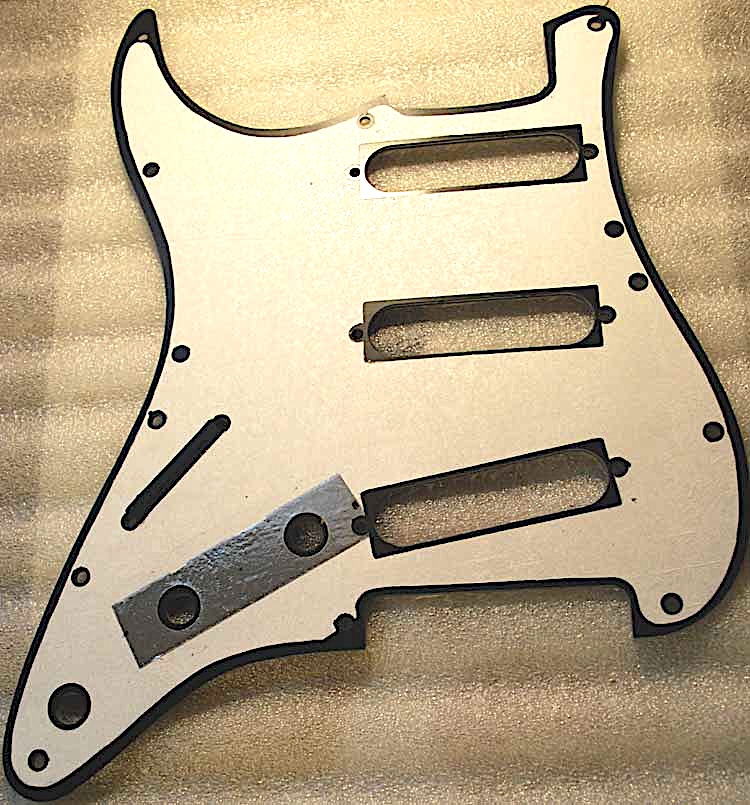
Every pickguard I ship has rear shielding… in the case of earlier (pre 2017 maybe) I was rear-coating the uncut blanks with a double coat of Y-Shield paint, which gives full emf shielding due to the carbon/silver particles in it’s formulation.
This presented problems, as Y-Shield is a water-based paint, and easily abraded to expose the silver particles, so it required two more coats of laquer to ‘seal’ it… which needed a subsequent mask-out and application of a metal fibre tape to allow contact to your guitar’s volume and or tone pots.
I now adhere an Aluminium shield prior to shipping… 0.1mm aluminium sheet, with a fine paper covering over all, leaving exposed aluminium ‘contact’ surfaces at the control pots for Strat, and adjacent to your Tele’s controls plate. In the case of Telecaster fitting, I usually suggest a short length of fine bared copper wire placed under both pickguard and controls plate to make the shield-connection.
The thickness of the Al. is not your thin cooking foil, but is the same thickness as used by our disposable oven-bake trays…


1959
Late 1959 – we got a band together… ‘Lincoln and the Lawmen’… Ha Ha…
Mike, myself, and Lincoln (Bill) – where’s our drummer, Miz? Little did I know it would lead me to a lifelong interest in music, and all things guitar.
Many different directions over the years, craftsman potter, farming, restaurateur, martial arts.
Always, a guitar close at hand.
Year 2000 saw me with a new Strat, and wanting an alternate to the tortoise plastic OEM-fitted pickguard.
That set me on a path… a Gold Quilted Maple pickguard for my new Strat… now, after ten years or so, I think I’m set on this Burst Red Figured Maple
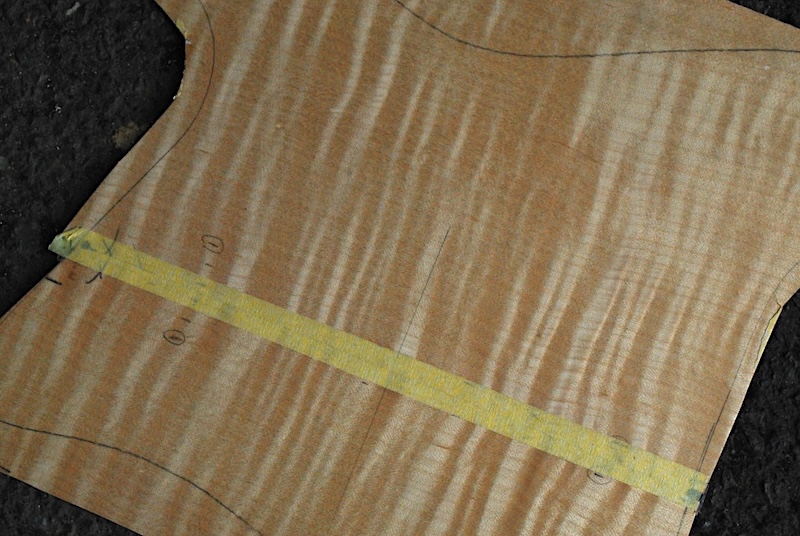
Careful alignment of opposing grains when bookmatching the maple face veneer is important… some grains are easy, others, not so, depending on the strength and visibility of the grain.
Note pencil marks on the same grain lines on each veneer leaf, helping with getting a true bookmatching join – I then mark the cutting lines top and bottom.
After slicing the decided upon cuts with a snap-blade, then clamping and sanding the cut edges to fully align, temporary tape is applied on the rear to hold the halves together, then a centre strip on the face.
Following is a thin paper jointing tape on the rear, then double coating with sealer on the rear, to avoid adhesive bleed-through when bonding.
Four high-pressure laminated veneers, with a beautiful Maple ‘top’ – they will NEVER split, warp, twist, and will remain stable in all weather AND gigging conditions.

Guitar making is a labor-intensive process that demands patience and perseverance, but the end result is always worth the effort – hopefully, a masterpiece that sings with clarity and resonance.
My Tele’s beginnings:
While steeped in tradition, guitar makers are pioneers of innovation, constantly pushing the boundaries of design and construction. Not so much this story, as my own Tele build began it’s life as a pickguard that I fancied, from a batch of my Orange Figured Maple production pickguards.
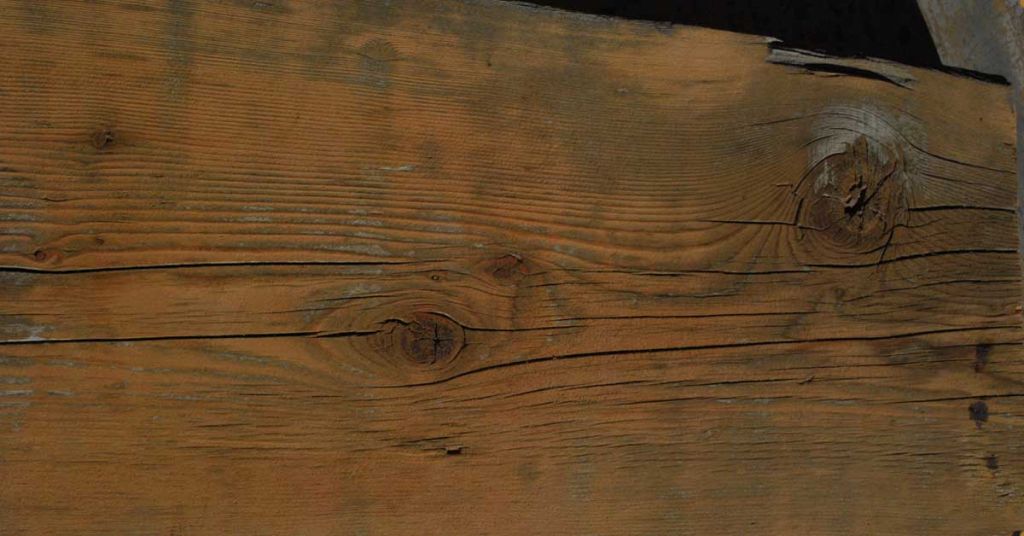
A year passed, before I located an old ‘found’ builder’s trestle plank of Oregon/Douglas Fir – could this be a Tele body??
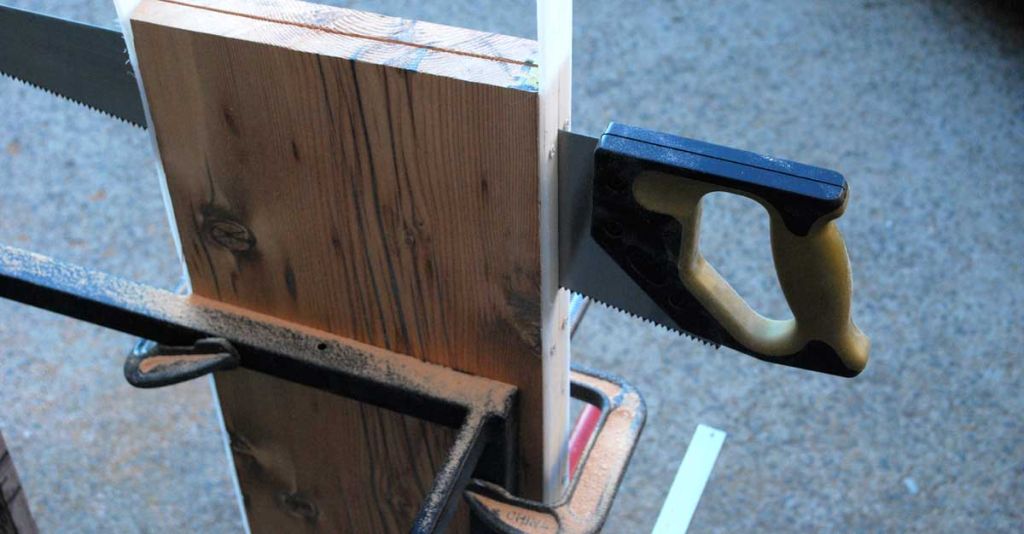
With multiple age cracks, and some full depth splits, I black epoxy filled front and back. The piece was then thicknessed, then hand-sawn to make the split for bookmatching

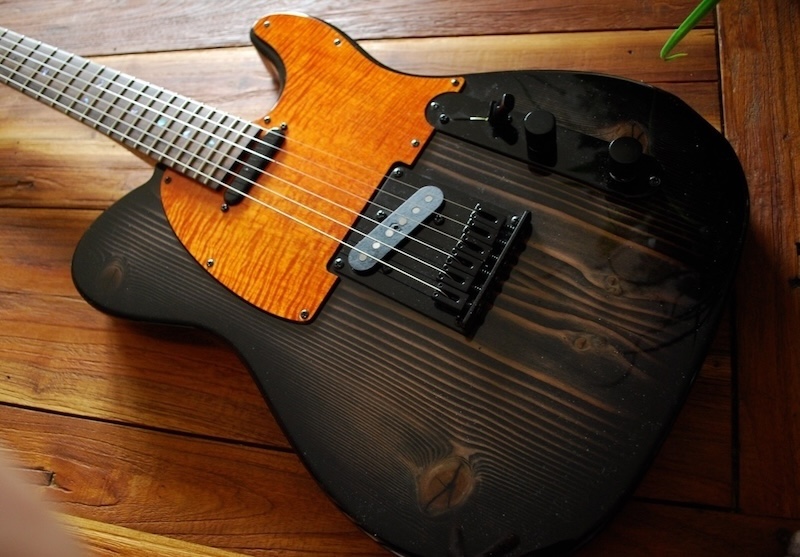
One of the greatest joys of guitar making is seeing an instrument come to life as a build progresses… no endless details, but after a year of grabbing a few minutes each day to work on ‘Tele’, I could see light at the end of the tunnel.
I finally realised the degree of work that goes in, before you see that beautiful guitar hanging on display in-store, that you’ve lusted over for years.
In a world filled with mass-produced commodities, the art of guitar making stands as a beacon of authenticity and craftsmanship. It’s a tradition that spans centuries, yet continues to evolve with each passing day.
So the next time you hear the strum of a chord or the wail of a solo, take a moment to appreciate the craftsmanship and passion that went into creating the instrument behind the music. For in the hands of a skilled guitar maker, a simple piece of wood becomes a symphony waiting to be played.